DRACULA - From Bloodsucker to Cultural Icon
Kulturstationen Vanløse, Copenhagen · Free
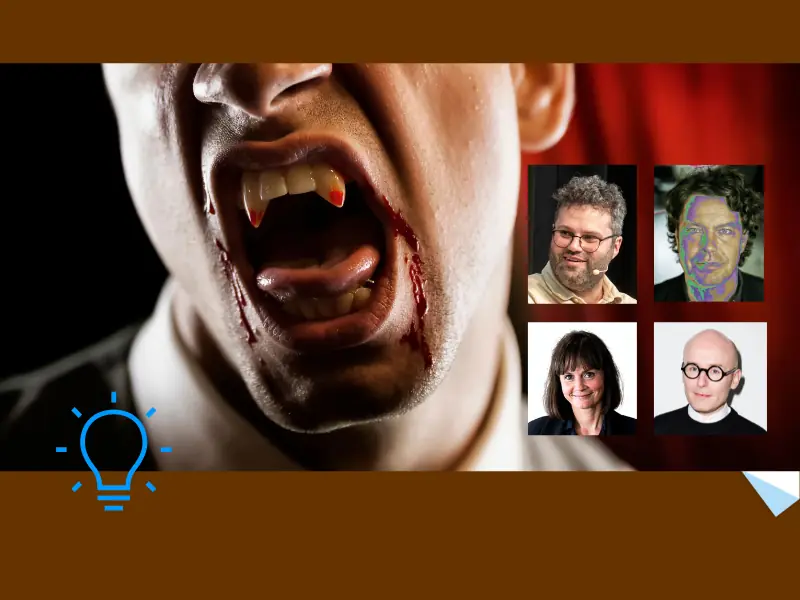
Dracula - From Bloodsucker to Cultural Icon: Tuesday 27 October 2026, 19:00–21:00, Kulturstationen Vanløse, Copenhagen. Admission is free.
Kulturstationen Vanløse hosts an evening about Dracula - from Bram Stoker's gothic novel to the iconic figure that has since left its mark on film, fashion and popular culture.
Three cultural voices take the stage, each illuminating the count's history from their own field: Maria Månson, Chris Pedersen and Jakob Levinsen. The conversation is led by cultural mediator Dennis Jacob Hess Rosenfeld.
Bram Stoker's Dracula was published in 1897, but more than 125 years later, the count from Transylvania is far from forgotten. On the contrary, he has evolved from a literary monster into one of the world's most recognizable cultural icons. Drawing on Jakob Levinsen's new Danish translation of the novel, the panel explores how the story and figure have changed across media and generations - and why the vampire still appears when we talk about sex, fear, desire, death, fashion and identity.
Jakob Levinsen is an author and translator behind the new Danish translation of Dracula. He has worked with literature, culture and translation for many years, and this evening he discusses Stoker's novel, its literary qualities and the work of bringing Dracula to life in Danish.
Maria Månson is a film journalist and presenter who has mediated film on many platforms for several years, including DR. She examines how Dracula has been interpreted on the big screen - from Bela Lugosi to contemporary vampires.
Chris Pedersen is a journalist, fashion expert and cultural mediator with many years of experience in the fashion and cultural world. He engages with fashion, subcultures, identity and the stories hidden behind our style, and this evening explores Dracula as aesthetics and icon - from gothic subculture and punk to modern fashion and brands.
Dennis Jacob Rosenfeld is an author and cultural mediator who guides us through the evening. He connects literature, film and fashion and ensures the conversation moves from Stoker's novel to Dracula as a modern cultural phenomenon, while the panel together explores why the figure still lives more than 125 years after its literary creation.
Lectures · Copenhagen 503 in the next 30 days →
 69lectureSun 25.10.Evening with Elin Brimheim Heinesen FO
 68lectureSat 21.11.Introduction to Knit Design
 65lectureWed 14.10.The Gospel Experience: WORKSHOP with Hezekiah Walker (USA), Mark Taylor (USA), Hans Christian Jochimsen (DK)
 65lectureTue 10.11.Science & Cocktails in X31: The Secrets Behind the World of Mushrooms
 63lectureMon 9.11.An Evening with Yotam Ottolenghi
 63lectureWed 11.11.Emma Holten and Sine Plambech on Debt
 100concertTue 23.3.Lizzy McAlpine
 100concertThu 22.10.Gavin DeGraw
 100concertMon 12.10.Little big
 100festivalSat 7.11.Post Punk Fest Cph II
 100festivalFri 7.5.Turbo Jugend Weekend Ticket Råhuset/Basement
 100clubFri 23.10.Gravity presents: Eric Prydz - Copenhagen