Rats and the City - Rat Control, Welfare and Everyday Life in 20th-Century Copenhagen
Hovedkassen, Københavns Rådhus, Copenhagen · 50 kr. · ≈ 7 €
Rats and the City - Copenhagen history: Thursday 29 October 2026, 15:30–17:00, Hovedkassen, Københavns Rådhus, Copenhagen. Tickets cost 50 kr.
Rats were first identified as a serious health threat and social menace in the latter half of the 19th century, driven by new scientific insights and the growth of modern cities. Throughout the 20th century, rat control became systematized and more efficient as the welfare state developed. Yet rats proved difficult to eradicate: dense housing, urban infrastructure, and abundant accessible waste created ideal living conditions for an animal that is almost omnivorous, an excellent climber and swimmer, and capable of gnawing through anything softer than glass and metal.
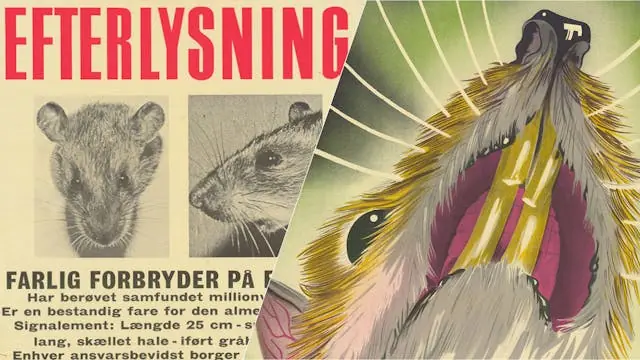
In this lecture, Mikkel Høghøj, curator at the Danish Museum of Technology, tells the story of how rats helped shape modern Copenhagen - how rat control became welfare policy, how Copenhagen functioned as a rat habitat, and how rats influenced Copenhageners' expectations of health, hygiene, and nature's role in the city.
Illustration: Posters from the National Committee for Rat Control, 1950 and 1968, Danish National Archives.
Lectures · Copenhagen 514 in the next 30 days →
 69lectureSun 25.10.Evening with Elin Brimheim Heinesen FO
 68lectureSat 21.11.Introduction to Knit Design
 65lectureWed 14.10.The Gospel Experience: WORKSHOP with Hezekiah Walker (USA), Mark Taylor (USA), Hans Christian Jochimsen (DK)
 65lectureTue 10.11.Science & Cocktails in X31: The Secrets Behind the World of Mushrooms
 63lectureMon 9.11.An Evening with Yotam Ottolenghi
 63lectureWed 11.11.Emma Holten and Sine Plambech on Debt
 100concertTue 23.3.Lizzy McAlpine
 100concertThu 22.10.Gavin DeGraw
 100concertSat 21.11.Sub Focus
 100festivalSat 7.11.Post Punk Fest Cph II
 100festivalFri 7.5.Turbo Jugend Weekend Ticket Råhuset/Basement
 100clubFri 23.10.Gravity presents: Eric Prydz - Copenhagen